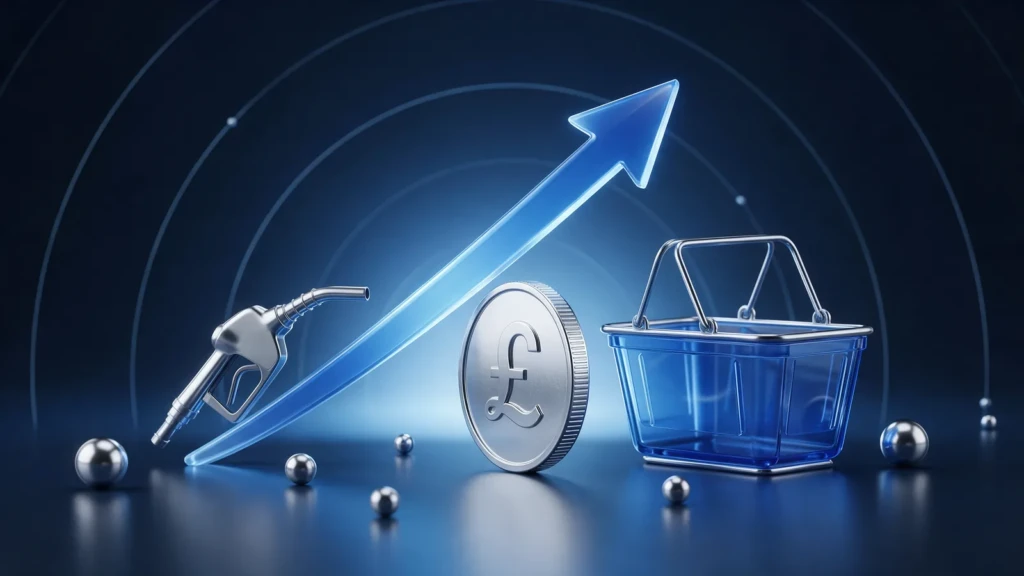
Figures from the UK Office for National Statistics published on October 21, 2026 showed the consumer price index rose 3.5% year on year in September, up from 3.1% in August and above market expectations of 3.4%. It is the highest inflation reading since October 2025. On the month, prices rose 0.4%.
Fuel leads the way
Transport made the largest upward contribution, with its annual rate jumping to 6.6% from 4.6% the month before. The ONS chief economist attributed the rise mainly to fuel, noting that the cost of diesel was the highest since July 2022. It comes as global oil prices rally strongly on tension in the Gulf.
Core inflation is rising too
More important for policymakers, the pressure was not limited to energy. Core inflation, which excludes energy, food, alcohol and tobacco, rose to 2.8% from 2.6%. That suggests higher costs are starting to spread into the prices of other goods and services, something the Bank of England watches closely.
What it means for the Bank of England
The Bank of England expects inflation to average about 3.75% in the final quarter of 2026 before rising to around 4% in the first quarter of 2027. With Bank Rate at 3.75%, many analysts now see a hike to 4% as a strong possibility, especially if energy prices keep climbing.
Why it matters for traders
- Sterling: hotter-than-expected inflation strengthens rate-hike bets, one of the main drivers of the pound against the dollar and the euro.
- Yields and gilts: expectations of tighter policy usually feed through to UK government bond yields.
- Equities: higher borrowing costs weigh on rate-sensitive sectors such as property and consumer stocks.
A reminder: pound pairs can move sharply around inflation data and rate decisions, and spreads may widen at those moments. Set your risk in advance and never base a decision on a single headline.
Why it matters
A surge in fuel prices lifted transport inflation to 6.6%, with diesel at its most expensive since July 2022, while core inflation rose to 2.8%, a sign the pressure is broadening.
Market reaction
The reading beat expectations of 3.4%, reinforcing expectations that the Bank of England will raise rates from 3.75% to 4%.
MIZANOVA view
The Bank of England expects inflation to keep rising toward 4% in early 2027. Energy prices remain the deciding factor for rates and sterling in the weeks ahead.